- 1096 Budapest Lenhossék utca 13.
- +36 30 533 6963
- H - P: 8.00 - 20.00

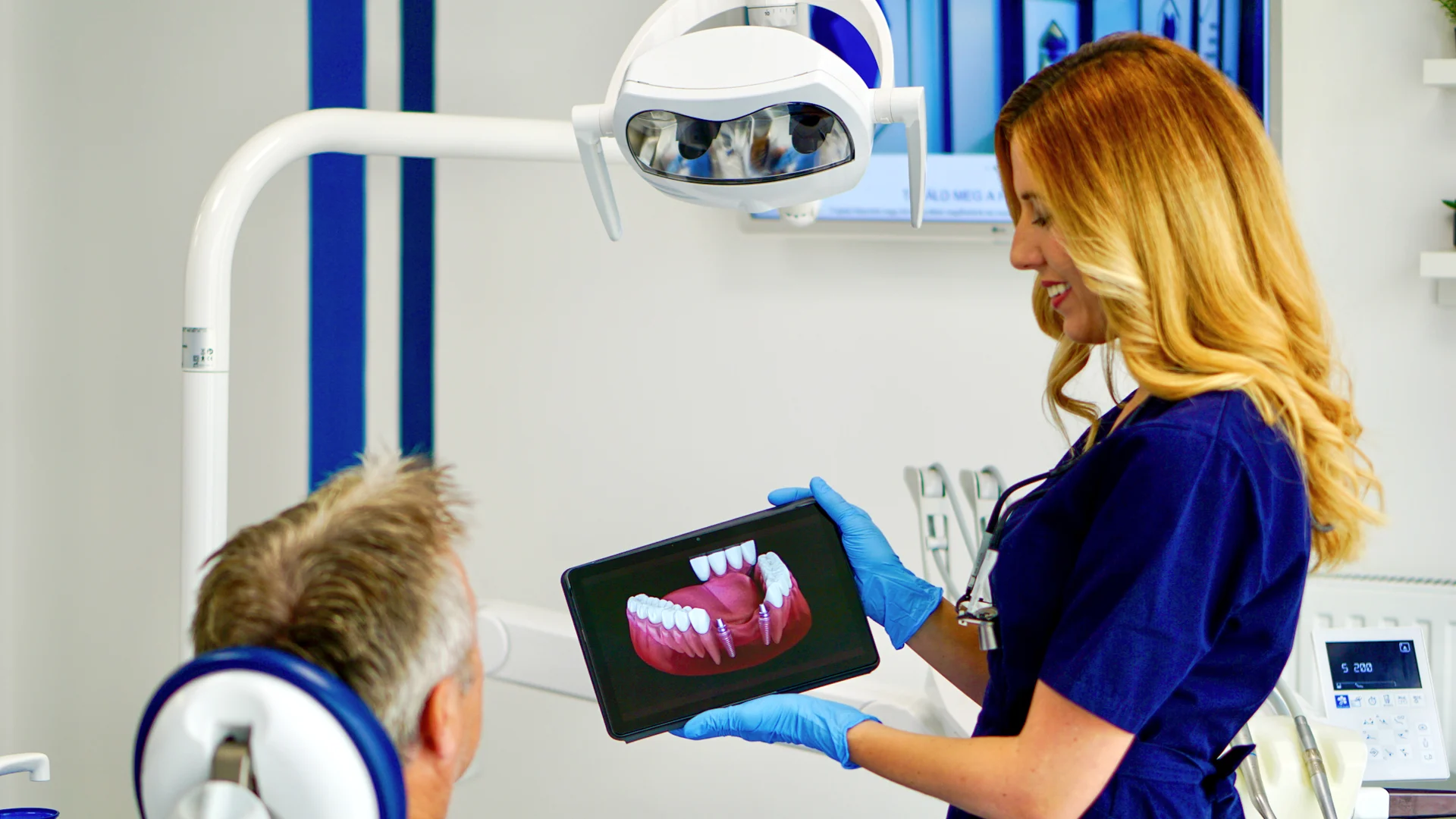
You do not need to choose a treatment. We help you find the right direction.
You want a healthier, more confident smile that feels comfortable, but you do not know whether veneers, orthodontics, crowns or another approach would help. At Dentist For You, we begin with your goals and assess your clinical situation before recommending options. With planning led by Dr Andrea Somogyi, the decision is made together.
You do not need a diagnosis or a chosen procedure. Tell us what bothers you and what you would like to change.
We consider the appearance of your teeth alongside chewing, load and jaw function.
Understand the proposed options, timing and costs before deciding. A consultation does not commit you to treatment.
Perhaps you avoid smiling in photographs, dislike the shape or colour of your teeth, are unhappy with older crowns, or want chewing to feel more comfortable. You do not have to translate that goal into a number of veneers or crowns.
First we listen. An in-person examination and any indicated diagnostics establish the clinical starting point. We explain which options may be appropriate, why and with what limitations. The decision combines professional recommendations with your priorities.
If you can visit, an in-person consultation is the most direct route to a clinical assessment. If you need guidance before travelling, or want to discuss an existing proposal, begin online.
At the clinic we examine the teeth, gums and bite. The necessary assessments support a detailed plan and an itemised, no-obligation quotation.
Live far away, need to decide whether to travel, or want a second opinion? A 15–20 minute Google Meet consultation with Dr Andrea Somogyi costs 15,000 HUF. Your records support preliminary options and indicative costs and timing, followed by a written summary.
Choose a topic to jump straight to the relevant section.
Smile planning is not only about appearance. Gnathology considers how the teeth meet, how the jaw moves and how the chewing system functions. These considerations also inform restorative and aesthetic planning.
We assess how the teeth meet and consider the loads placed on planned restorations.
Tell us about uncomfortable chewing, a tooth that feels high or noticeable wear. An examination is needed to establish the cause.
Where indicated, a gnathological examination and digital movement analysis may support planning. The assessments are selected for your clinical needs.
Smile design considers tooth shape, proportions, colour and their relationship with your lips and face. A smile makeover brings the appropriate treatments together to work towards that agreed goal. It is not a fixed package or a rule that every visible tooth must be treated.
A small change may meet one person’s needs; another person may need several stages. Preserving suitable existing teeth and restorations matters. Before recommending treatment, we need to understand the condition of the teeth and gums, existing dental work and the way the teeth meet.
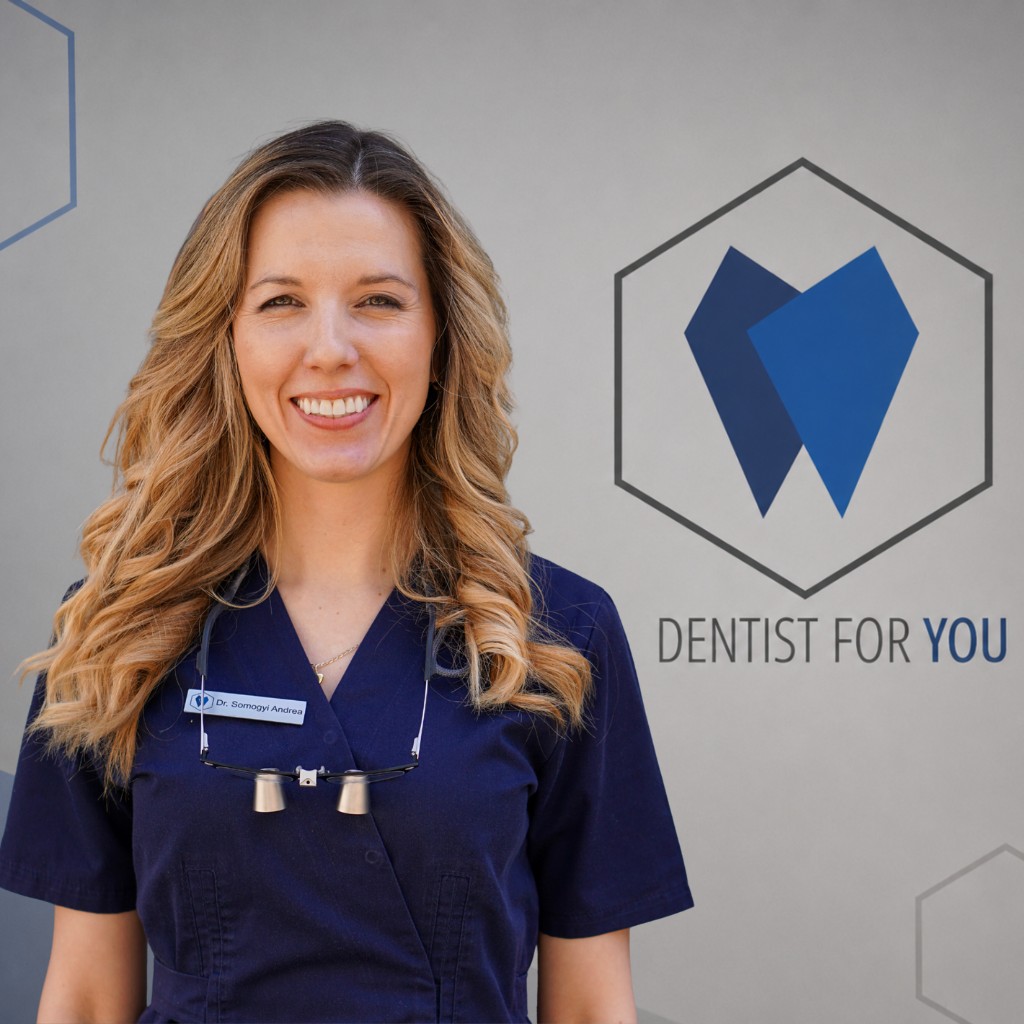
Dr Andrea Somogyi, the clinical lead at Dentist For You, brings together the appearance of your smile, restorative planning and the way your teeth and jaw function. She also personally conducts the online consultations.
The discussion starts with your goals and clinical situation. Where several treatments are involved, the relevant clinicians work as a team, with a coordinated sequence of care.
The starting point is the problem and your goal. The treatment follows the assessment, rather than the other way round.
Veneers may be discussed for suitable teeth when shape, proportion or appearance is the concern. We also consider whether a less invasive option or another sequence would better meet your needs.
Existing restorations, damaged teeth and gaps may require a restorative plan. The condition of the supporting teeth and the intended function matter alongside appearance.
When teeth are missing, implants may be one option. Their suitability and position must be considered together with the restoration that will ultimately replace the missing teeth.
Tooth position, gum health or other existing problems may need attention first. Orthodontic or other preparatory care can sometimes change which restorative options make sense.
Sometimes the concern extends beyond the appearance of the front teeth. Several missing teeth, worn teeth, older crowns and difficulty chewing may need a coordinated restorative approach. The plan then needs to connect appearance with function, tooth prognosis and a realistic treatment sequence.
Full-mouth rehabilitation does not automatically mean removing all the teeth. The appropriate scope depends on the findings. Our guide to planning complex dental treatment in Budapest explains this broader process in more detail. An initial discussion helps establish which questions need to be answered for your own case.
We discuss the changes you want, previous treatment, concerns and practical constraints.
An in-person examination and any clinically indicated records establish what can be planned responsibly.
You receive an explanation of the proposed approach, alternatives and the questions that influence the choice.
Digital records, models or a trial can support discussion when relevant to your treatment. The clinician explains what is included.
Preparatory work, provisional and final restorations are organised into an individual treatment plan.
Cleaning, reviews and any recommended protective measures form part of maintaining the result.

At the clinic, a Medit i900 intraoral scanner can record the teeth digitally. Where indicated, MODJAW supports recording and analysing jaw movement, helping the clinician consider function during restorative planning. The Rapid Shape ONE printing workflow supports the production of items such as models within the relevant digital workflow.
These tools support clinical judgement and communication with the dental laboratory. They are used according to the case; they are not all required for every patient. They are also part of the in-person process, not examinations performed during an online video call.
There is a difference between chair time, the number of appointments and the overall treatment period. Assessment, preparation, a trial or provisional phase and final fitting may happen at separate visits. If healing or other preparatory treatment is needed, the calendar period can be longer than the days spent at the clinic.
If you live abroad, discuss travel constraints early. We can explore which stages might be coordinated and which require time between them. Do not commit to a short stay on the assumption that every possible treatment can be completed in one trip.
The number and condition of the teeth, the chosen treatment, materials, preparatory care and provisional work all affect the total. A veneer price or crown price is a useful reference, but multiplying it by the number of visible teeth does not produce a complete individual quotation.
For orientation, our listed fees include a porcelain veneer at 130,000 HUF per tooth, a direct composite veneer at 60,000 HUF per tooth and a zirconia crown at 120,000 HUF per crown. These are individual treatment items, not interchangeable solutions or a full smile-makeover package. The appropriate option is established through assessment.
See our dental price list for further items. Your individual plan should make clear what is included, what depends on further findings and how the proposed stages contribute to the overall cost.
An in-person consultation and the necessary diagnostics support a detailed, itemised, no-obligation quotation. The online consultation provides preliminary, indicative guidance; findings at the examination may change the plan and the cost.
Read patients’ reviews of their experience at our clinic.
Dentist For You
1096 Budapest, Lenhossék utca 13.
Monday–Friday: 08:00–20:00.
Our doctors and reception team can communicate in Hungarian and English.
Some of our doctors also speak German or Slovak. Tell reception your preference in advance so they can confirm the language arrangements available for your appointment.
You do not have to choose a procedure. In the message field below, write: I would like an in-person smile consultation. Add a short description of your goals or concerns. Reception will contact you to arrange an appointment.
The in-person assessment and any indicated diagnostics support a discussion of your options and a detailed, no-obligation quotation. Reception will explain the applicable examination fees when arranging your visit.
No. A smile makeover describes the goal and coordinated plan, not a single treatment. Veneers are one possible option for suitable teeth. Your assessment may point towards a different or smaller intervention.
Depending on the treatment, digital planning, models or a trial may help you discuss the proposed appearance. The appropriate method and its limits are explained during planning. A preview is not a guarantee of an identical clinical outcome.
Not necessarily. We consider what should be preserved and what actually needs changing. The extent of treatment depends on the starting condition and the agreed goal, rather than a predetermined number of veneers or crowns.
Yes. The online consultation can help you understand an existing proposal, possible alternatives and questions that need an examination. Send the relevant records through the channel agreed with reception. A complex plan may require more investigation than a short video call.
The online consultation is an initial discussion and preliminary orientation. The in-person diagnostic and design process is a separate stage, planned according to your case.
Your detailed individual treatment plan and full quotation are based on an in-person examination. Before travelling, we may be able to discuss indicative costs if the available information supports this. Additional findings can change the scope, sequence or cost of treatment.
In-person planning considers teeth, gums, your bite and functional concerns. A gnathological examination may be recommended where indicated. Online we can discuss your symptoms, but cannot perform a complete bite examination.
Online guidance is indicative and depends on your records. An in-person examination and necessary diagnostics support a detailed, itemised, no-obligation quotation. No obligation to proceed does not mean that examinations are free of charge.
Read our guide to the wider clinical questions behind full-mouth rehabilitation.
See what to prepare and what can be discussed with Dr Andrea Somogyi before travelling.
Tell us the change you hope to achieve. We will assess your situation, explain the options and help you decide. Visit in person when you can, or use an online consultation to prepare before travelling.
Dentist For You
Leave your contact details and our team will call you to arrange an appointment.