
Dentist For You expert guide
Dental Implants in Budapest: Costs, Timeline and Treatment Planning
Dental implant treatment is not a single product or a one-visit purchase. A predictable result depends on the condition of the bone and gums, the position of the implant, the design of the final tooth and the way the restoration fits into the bite.
Quick answer
What should you know before choosing dental implants in Budapest?
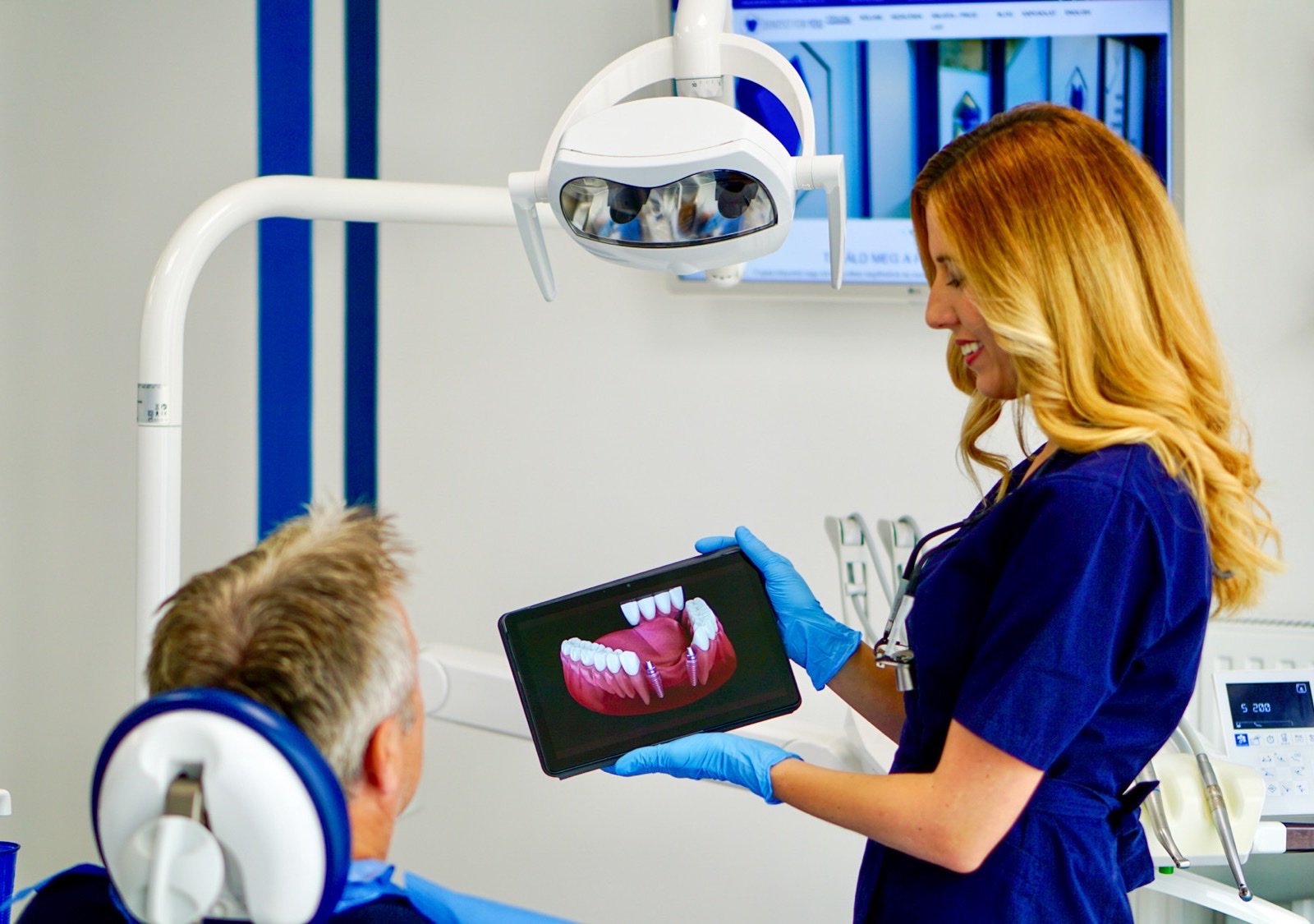
A dental implant replaces the root of a missing tooth and supports a crown, bridge or denture. Before comparing prices, clarify what the quotation includes, whether bone grafting or temporary teeth may be required, how many visits are expected and who is responsible for the surgical and restorative phases.
Diagnosis
Start with the final tooth
Implant position should be planned around the restoration, bone, gums and bite.
Total cost
Compare complete plans
The implant, abutment, crown, imaging, surgery and possible grafting may be priced separately.
Continuity
Plan follow-up early
Local residents and travelling patients both need a realistic maintenance and review plan.
Personal assessment
What will the first consultation clarify?
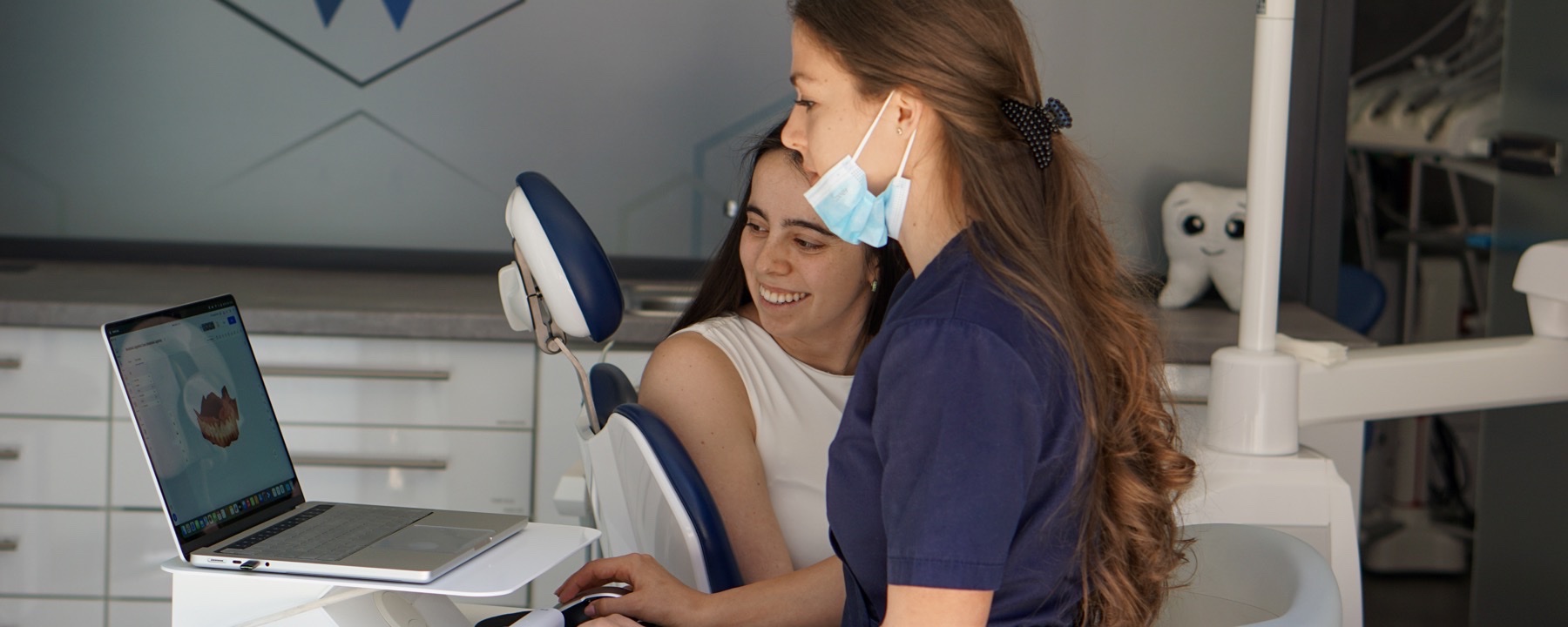
A remote exchange of records may help with orientation for patients travelling to Budapest, but it cannot replace a clinical examination. A definitive diagnosis and treatment plan require an in-person assessment.
What will the assessment clarify?
- Which teeth can be preserved and which genuinely need replacement?
- Is there enough bone in the correct position, or is augmentation likely?
- Would a crown, bridge, removable denture or implant-supported restoration best meet the goal?
- What temporary solution is possible during healing?
- How many clinical visits and what maintenance programme are expected?
Planning treatment in Budapest from Hungary or abroad
For people already living in Hungary, the practical advantage is continuity: diagnostic, treatment and maintenance appointments can be organised with the same clinical team. Patients travelling from abroad should additionally clarify how many visits are realistic, which stages depend on healing, what temporary solution is possible and who will provide care between visits. In both situations, an English-language written plan should describe the diagnosis, alternatives, expected stages, fees and review needs. Choosing a clinic only by a package price can hide clinically important differences in scope, materials and follow-up.
A useful treatment proposal should also explain what happens if the preferred route proves unsuitable after examination. Alternatives, limitations and maintenance are part of informed decision-making. Photographs, digital scans and radiographs can support communication, while diagnostic models or provisional restorations may be appropriate in more complex cases. These records are valuable only when they answer a clinical question. They do not replace discussion of the patient’s priorities, medical history, comfort, available time and tolerance for future maintenance.
What is a dental implant, and what does it actually replace?
Short answer: A dental implant is an artificial root, usually made from titanium, placed in the jawbone. It does not by itself replace the visible tooth: an abutment and a custom crown, bridge or denture complete the restoration.
This distinction matters when comparing offers. A low headline price may refer only to the implant fixture, while the patient ultimately needs a functioning restoration with several components. The shape, material and cleaning access of the visible prosthetic part influence comfort and long-term maintenance as much as the surgical component.
For a single missing tooth, the implant may support one crown without preparing the neighbouring teeth. For several missing teeth, fewer implants may support a bridge. In a fully edentulous jaw, implants may retain either a fixed bridge or a removable overdenture. These solutions are not interchangeable; each has different hygiene, repair, bone and cost implications.
Who may be suitable for implant treatment?
Short answer: Suitability depends on oral health, general health, available bone, gum condition, smoking, medication, hygiene and the intended restoration. Age alone is rarely the decisive factor once growth has finished.
Active gum disease, untreated decay and infection should be stabilised before implant placement. Medical conditions and medicines may alter healing or surgical risk, so a complete medical history is necessary. Smoking and poor plaque control increase risk and may change the recommendation or timing.
The assessment also considers whether the patient can maintain the restoration. A technically successful implant can still develop inflammation around it if cleaning access is poor or reviews are neglected. For this reason, long-term care is part of candidacy, not an optional extra after surgery.
Why are a clinical examination and 3D imaging important?
Short answer: The examination identifies the restorative goal and the health of the mouth; three-dimensional imaging may be needed to assess bone volume and anatomical structures. Imaging supports planning but does not replace clinical judgement.
A panoramic radiograph provides an overview, while cone beam CT can show the width and height of bone and the relationship to nerves and sinuses. The clinician combines these findings with gum levels, smile line, available space and the condition of adjacent teeth.
Planning backwards from the desired tooth helps avoid an implant that is integrated in bone but difficult to restore. In aesthetic areas, millimetres can affect gum symmetry and emergence profile. In posterior areas, the direction of force and available restorative space are especially important.
How many stages and visits does a dental implant require?
Short answer: Most implant treatments include assessment, surgical placement, a healing period, restorative records and delivery of the final tooth. The number and timing of visits vary according to grafting, healing, temporary restoration and case complexity.
Some patients can receive an implant and a temporary restoration promptly; others need extraction healing, bone augmentation or an unloaded healing period. Immediate placement and immediate loading are different concepts and neither is automatically appropriate.
Patients travelling to Budapest should receive a written sequence before booking travel. It should identify which appointments are essential, what can change after examination and where urgent or routine follow-up will take place. Residents in Hungary benefit from easier access, but still need the same staged planning.
How long does healing take before the final crown?
Short answer: Integration of the implant with bone takes time and cannot be reduced to one universal number. Depending on the site, bone quality, grafting and loading strategy, the restorative phase may begin after several weeks or months.
During healing, the implant may be covered, fitted with a healing component or support a carefully controlled temporary restoration. The temporary solution must protect tissue and appearance without applying harmful force.
The final crown should not be rushed simply because the implant feels comfortable. Clinical stability, tissue condition and restorative records guide timing. Complex bridges often require additional verification and try-in appointments to control fit, bite and cleanability.
What determines the cost of dental implants in Budapest?
Short answer: Cost depends on the number of implants, diagnostic imaging, surgery, implant system, abutments, temporary teeth, final restoration, possible grafting and the complexity of the case. A meaningful comparison uses the full treatment plan, not a single component price.
Ask whether the quotation includes scans, extraction, sedation if required, bone graft materials, temporary restorations, abutments, the final crown or bridge and follow-up. A lower initial figure may become more expensive when essential components are added later.
Our current fees are listed on the English dental price list. Exact costs can only be confirmed after examination because the same missing tooth can require very different preparation in two patients.
When is bone grafting necessary?
Short answer: Bone augmentation may be recommended when the available bone cannot support an implant in a restorative and biologically appropriate position. Not every implant needs a graft, and not every deficiency requires the same technique.
After tooth loss, the ridge can change in width and height. The upper posterior jaw may also be limited by the maxillary sinus. The clinician assesses whether a minor simultaneous graft, a staged augmentation, a sinus procedure or an alternative restorative design is appropriate.
The need for grafting changes cost, healing time and risk. It should therefore be discussed before treatment begins, while recognising that the final decision may depend on three-dimensional imaging or findings during surgery.
Can you have temporary teeth during implant treatment?
Short answer: Many patients can receive a temporary solution, but its form depends on stability, bite, aesthetics and the number of missing teeth. A temporary tooth must protect healing rather than merely fill the space.
Options may include a removable temporary denture, an adhesive solution, a tooth-supported provisional or, in selected cases, an implant-supported temporary restoration. Each option distributes force differently.
Temporary restorations also help test shape, speech and appearance before the final prosthesis. They are not intended to be treated like definitive teeth, and patients should follow dietary and cleaning instructions carefully.
How do dental implants fit into the bite?
Short answer: The final restoration must distribute force in harmony with the remaining teeth and jaw movements. An implant does not have the same periodontal ligament feedback as a natural tooth, so contact design and maintenance deserve particular attention.
A crown that is too high may feel uncomfortable or overload components. Conversely, a restoration designed only to avoid contact may not function well. The plan considers static contacts, chewing movements, clenching, opposing teeth and the material of the restoration.
In complex cases, digital bite analysis or jaw-motion recording may supplement conventional records. The purpose is not technology for its own sake, but a restoration that can be cleaned, repaired and used comfortably over time.
What are the alternatives if an implant is not the best choice?
Short answer: Alternatives may include leaving the space, a tooth-supported bridge or a removable partial or complete denture. The best option depends on neighbouring teeth, function, aesthetics, hygiene, anatomy, time and priorities.
A bridge may be sensible when adjacent teeth already require crowns, while avoiding preparation of healthy neighbours is one possible advantage of an implant. A removable denture can restore several missing teeth with less surgery, though stability and adaptation differ.
A responsible consultation compares these routes rather than presenting an implant as the only modern answer. Treatment should solve the patient’s actual problem with an acceptable biological and maintenance cost.
What should international and expatriate patients arrange before treatment?
Short answer: Bring relevant radiographs, medication details and previous treatment records, and ask for a staged written plan. Clarify communication, payment, travel timing, temporary teeth and follow-up before committing.
An online exchange can help determine whether an in-person implant consultation is reasonable, but diagnostic certainty usually requires examination and current imaging. Do not book a very tight return journey after surgery, and ask whom to contact if symptoms change.
For people living in Hungary, English-language continuity can be as important as the procedure itself. For patients travelling from abroad, the clinic and patient should agree which reviews must occur in Budapest and which can safely be coordinated with a dentist at home.
How are implants maintained after treatment?
Short answer: Implants require daily cleaning, professional maintenance and periodic clinical and radiographic review. They cannot decay, but the surrounding tissues can become inflamed and prosthetic components can wear or loosen.
Cleaning tools must fit under bridges and around implant crowns. The hygienist can demonstrate an individual method using brushes, floss or water-based aids where appropriate. Bleeding, swelling, bad taste, mobility or a change in bite warrants assessment.
Long-term reviews also examine screws, ceramic, acrylic, contacts and opposing teeth. Maintenance is not evidence that treatment failed; it is part of caring for a complex restoration over many years.
How can the main treatment routes be compared?
The right route is determined by diagnosis rather than by one headline price. This table is an orientation tool; an examination is still needed before an individual recommendation can be made. Individual anatomy, oral health, priorities and long-term maintenance can change which option is clinically reasonable.
| Option | When it may be considered | Important planning question |
|---|---|---|
| Single implant crown | One tooth is missing and neighbouring teeth can remain untouched | Is the bone and gum profile suitable for a natural-looking crown? |
| Implant-supported bridge | Several adjacent teeth are missing | How many implants are needed for stable support and cleanability? |
| Removable implant-retained denture | Improved stability is needed with a removable restoration | Can the patient clean and maintain the attachments predictably? |
| Fixed full-arch restoration | Most or all teeth in one jaw are missing or non-restorable | Are bone, hygiene access, speech and repair options acceptable? |
Medical references
Selected sources used for the clinical review of this guide:
Frequently asked questions
What patients usually want to know
Is implant surgery painful?
Local anaesthesia is used to control pain during surgery. Swelling, bruising and discomfort can occur afterwards; the expected course and pain relief should be discussed individually.
Can an implant be placed immediately after extraction?
Sometimes, but only when anatomy, infection control, bone and soft tissue conditions permit. Immediate placement does not always mean an immediate final tooth.
Do dental implants last forever?
No treatment can be guaranteed for life. Good planning, hygiene, smoking status, bite, material maintenance and regular reviews all influence longevity.
Can smokers have dental implants?
Smoking increases healing and implant-related risks. The clinician may recommend cessation and may alter or postpone treatment depending on the individual risk.
Can I fly after implant surgery?
Travel advice depends on the operation, swelling risk, sinus involvement and medical history. Discuss the itinerary before surgery rather than relying on a general rule.
Why can two implant quotations be very different?
They may include different components, implant numbers, materials, grafting, temporary teeth, diagnostics and follow-up. Compare written complete plans.
Who plans the crown as well as the implant?
Implant treatment is both surgical and restorative. Coordination between the surgeon and the dentist designing the final tooth is essential.
Where can I see Dentist For You prices?
The clinic’s current fees are available on the English dental price list; an individual plan follows examination.

Expert background
Dr Andrea Somogyi’s comprehensive approach
As lead dentist and a lecturer at Semmelweis University, Dr Andrea Somogyi approaches complex treatment through restorative, aesthetic and functional planning. The objective is not an isolated procedure, but a maintainable result that fits the patient’s bite and long-term treatment needs.
Prosthodontic planningFunctional dentistryDigital planningSemmelweis lecturer
This article provides general patient information and does not replace a personal dental examination, diagnosis or individual medical advice.
Clinicians involved in this field
Clinicians involved in implant treatment
Implant surgery and oral surgical assessment
Dr Robert Bernath
Dento-alveolar surgeon involved in implant placement and surgical assessment.
Prosthodontics and final restoration
Dr Jozsef Salata PhD
Prosthodontist contributing to the crown, bridge, material and long-term functional plan.
Would you like a complete implant treatment plan?
Contact our Budapest clinic in English. We will explain which records are useful and arrange the appropriate first consultation.